
“Does Moses have a brain?”
That was the question one of his classmates asked last fall during a lesson about the brain in the Counseling class I was teaching. They were learning about different parts of the brain and the jobs they do, focusing on the thinking, feeling, and doing parts of the brain.
Standing in front of the class, I could tell that many of the other students were surprised she had actually asked that question. Because not only was I the school counselor teaching the lesson, I was also Moses’ mom. I could tell that many of them were thinking, “Is she going to get mad/upset?”
I looked at her and gave her a little smile and said, “Yes. Moses had a brain. He’s a human and all humans have brains. I think you’re noticing that his brain works differently because he doesn’t talk and do some of the same things in the same way you do.”
Did it sting a little when she asked that question? Of course. But more than that, I felt grateful that she was trying to understand what was going on with this boy in her class who was clearly different from most of the other students. I was grateful for the authentic curiosity and willingness to try to understand as I did my best to explain that having Down syndrome caused the parts and connections in his brain to work a little differently. I told the class that it was kind of like the parts of his brain were trying to talk to each other, but they had a hard time hearing each other. So they had to repeat themselves and practice things more to make sure they were getting it right.
A couple of months after that question, I heard another one. This time from his younger cousin. I overheard her asking “Why doesn’t Moses talk?” Unfortunately, I was in another room and was busy with something so I wasn’t the one she was asking and I didn’t get to answer. I would have loved to tell her that his words don’t come out clearly because his brain works differently. But he “talks” in other ways, like how he taps her shoulder to get her attention and uses gestures with his hands to help her know what he’s trying to tell her or wants her to do. Or how he joins in on games and laughs along with his cousins as they play without needing to say a word. Or how he holds out his arms for a hug.
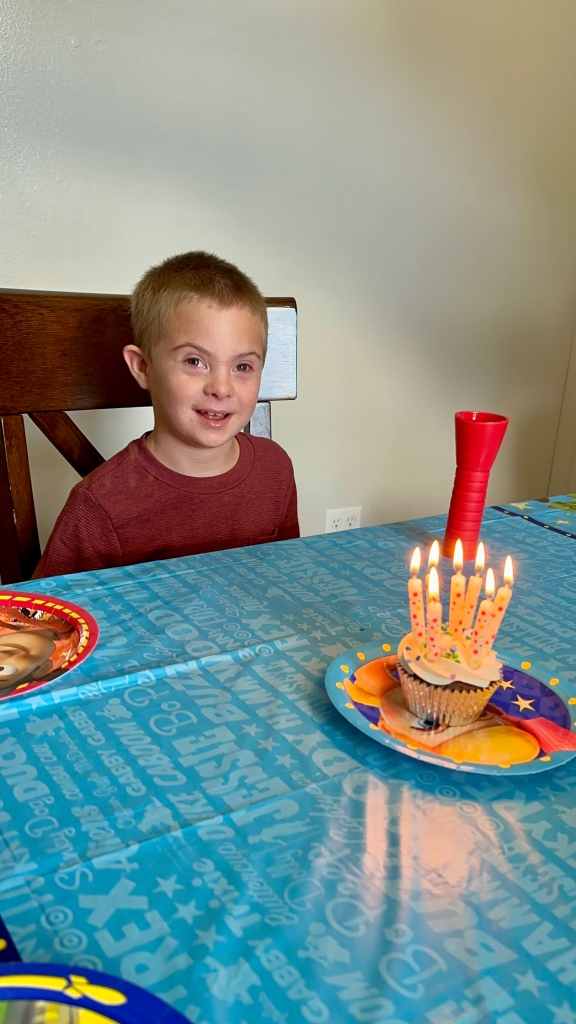
I love it when people ask questions about Moses. Especially kids. Questions reflect a desire to know him. To understand him. It’s not a bad thing to notice that he’s different or that things are different for him. That comes with him having an extra chromosome. Ignoring that fact or brushing it off can actually be a much more hurtful thing. Since having Moses, I have adopted the mindset that questions lead to knowledge, knowledge leads to understanding, understanding leads to acceptance, and acceptance leads to inclusion.
That’s what we want for Moses. For him to be accepted and included for who he is. If asking questions about him is going to lead to that, then ask all the questions!
Which leads me to two of my favorite questions that I’ve been asked in the last year:
“Where is Moses?”
“Can Moses come play?”
What questions do you have?




 All the Ups and Downs